
 EN
EN




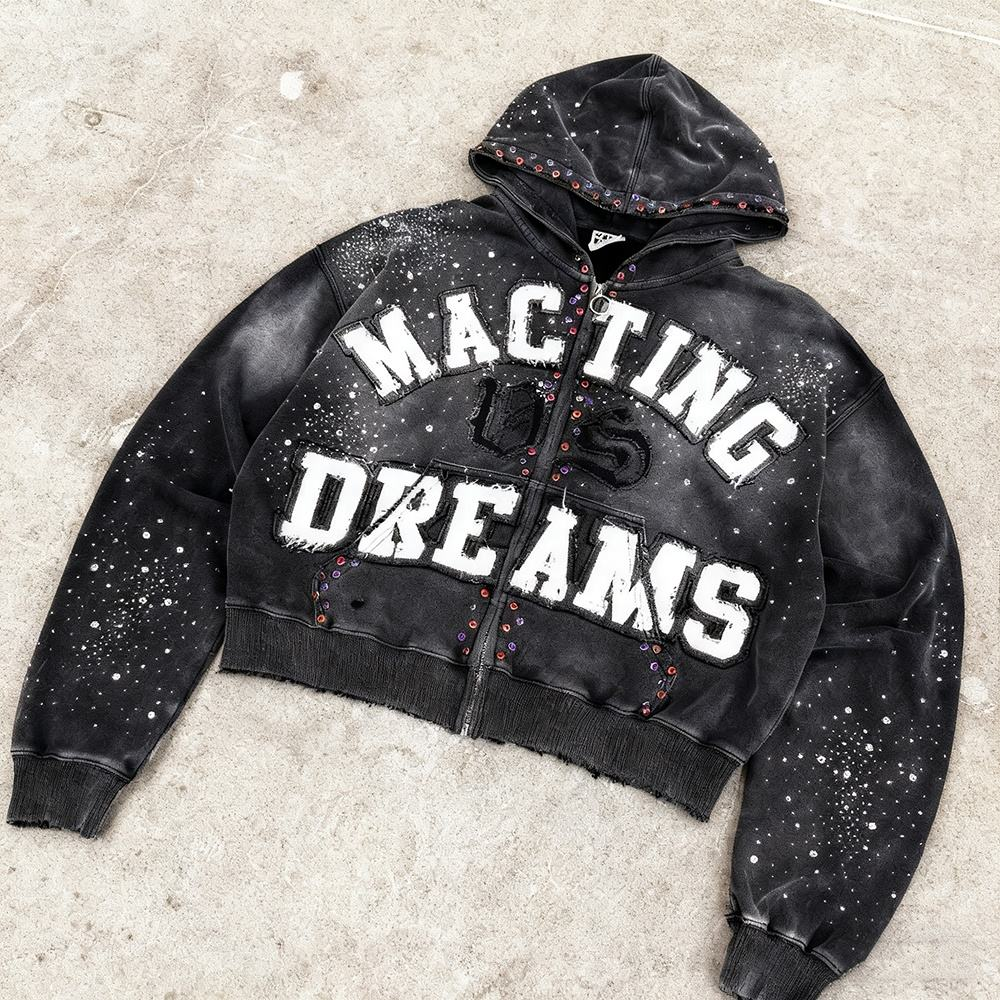
Why Rhinestones Detach from Hoodies: Understanding Adhesion and Fabric Stress
Rhinestone hoodies have become a popular choice in streetwear, custom fashion, and premium casual apparel. However, one of the biggest production challenges is maintaining rhinestone attachment throughout the garment’s lifecycle.
Rhinestone detachment usually results from a combination of factors, including adhesive performance, fabric movement, washing conditions, and application methods. Understanding these factors helps brands and manufacturers choose the right decoration process for durable custom hoodies.
Why Rhinestones Become Loose on Hoodies
The main reason rhinestones detach is the gradual weakening of the connection between the stone and the fabric surface.
During washing, several factors can affect adhesion:
water exposure
detergent chemicals
washing temperature
mechanical friction
fabric stretching
Hoodie fabrics, especially cotton and cotton-blend knits, naturally expand and recover during wearing and laundering. When rhinestones are attached to areas with frequent movement, such as the chest, shoulders, sleeves, and pocket areas, repeated stress may gradually affect the adhesive layer.
Fabric flexibility is important because the decoration must move together with the garment. If the adhesive is too rigid or the application process is not properly controlled, small gaps may appear between the rhinestone and fabric surface.
Common Rhinestone Attachment Methods for Hoodies
Sewn-In Rhinestones for Enhanced Mechanical Security
Sewn-in rhinestones use thread or mechanical fastening to secure decorative stones directly onto the garment.
This method provides strong attachment because the rhinestone is physically connected to the fabric instead of relying only on adhesive. It is often selected for premium fashion pieces where durability and handcrafted appearance are important.
However, sewn applications usually require more production time and higher labor costs, making them more suitable for special designs or higher-end collections.
Hotfix Rhinestones for Efficient Large-Scale Production
Hotfix rhinestones are widely used in commercial hoodie production because they combine efficient application with reliable decoration performance.
The stones contain a heat-activated adhesive layer that bonds with fabric under controlled pressing conditions. Successful application depends on several factors, including:
fabric composition
adhesive quality
pressing temperature
pressure control
application time
For cotton, fleece, and blended hoodie fabrics, manufacturers usually conduct testing before bulk production to ensure the decoration remains stable after washing.
Flexible Fabric Adhesives for Special Applications
Flexible fabric adhesives can be used for certain decorative designs, especially smaller production runs or creative applications.
Compared with rigid adhesives, flexible formulas are better suited for knitted fabrics because they can better accommodate fabric movement.
For commercial hoodie production, adhesive selection should consider washing requirements, garment usage, and production consistency.
How to Improve Rhinestone Hoodie Durability During Washing
Proper care can help maintain rhinestone appearance and reduce unnecessary stress on decorative areas.
Recommended practices include:
washing garments inside out
using gentle washing programs
avoiding excessive heat
using mild detergents
air drying when possible
Turning the hoodie inside out helps reduce direct friction between rhinestones and washing machine surfaces or other garments.
High-temperature drying may increase stress on adhesive layers, so lower-temperature drying methods or natural air drying are generally preferred for decorated garments.
Manufacturing Considerations for Custom Rhinestone Hoodies
For brands developing custom rhinestone hoodies, durability starts during production.
Reliable manufacturers usually focus on:
selecting suitable rhinestone types
testing adhesive compatibility
controlling application parameters
checking decoration quality before shipment
Sample testing before mass production is especially important because different fabrics, colors, and garment structures can influence decoration performance.
A well-designed rhinestone hoodie requires a balance between visual impact, comfort, production efficiency, and long-term wear performance.
FAQ
Why do rhinestones fall off hoodies?
Rhinestones may loosen because of adhesive fatigue, fabric movement, washing conditions, and repeated mechanical stress.
Which rhinestone attachment method is best for hoodies?
The best method depends on the design and production requirements. Hotfix rhinestones are commonly used for efficient production, while sewn-in rhinestones are suitable for designs requiring stronger mechanical attachment.
Can rhinestone hoodies be machine washed?
Yes, but gentle washing methods are recommended. Turning the garment inside out and avoiding high heat can help protect the decoration.
Are rhinestone hoodies suitable for wholesale production?
Yes. With proper material selection and quality control, rhinestone hoodies can be produced for wholesale, private label, and custom streetwear collections.
How can manufacturers improve rhinestone durability?
Manufacturers can improve durability through suitable rhinestone selection, controlled application processes, fabric testing, and quality inspection before shipment.